Lasting organisational change takes more than a new structure or strategy. An organisational development consultancy helps leaders align culture, capability and ways of working with the change the organisation needs. It also considers how decisions in one part of the organisation affect the rest.
That matters because a plan can look sound at board level and still fail in day-to-day work. People may not understand the reason for change, leaders may send conflicting signals, or established practices may not transfer cleanly when organisations come together. These are operational issues, not side concerns.
This article explains how organisational development consultancy can support culture change, build organisational capability and guide transformation. It covers what the work involves, why stakeholder understanding matters and how systemic thinking can reveal unintended effects early. The focus is on connecting leadership intent with what people can put into practice.
Key Takeaways
- During a merger, examine which existing practices support the intended culture before deciding what to retain or change.
- Build capability by connecting leadership behaviour, team dynamics and work design to the organisation’s goals.
- Plan transformation across the whole organisation, recognising that changes in one area can affect delivery elsewhere.
- Involve stakeholders early and turn the diagnosis into practical actions, clear ownership and disciplined implementation.
- Use external consultancy when leaders need an objective perspective to align culture, capability and business growth.
Culture change during mergers and acquisitions
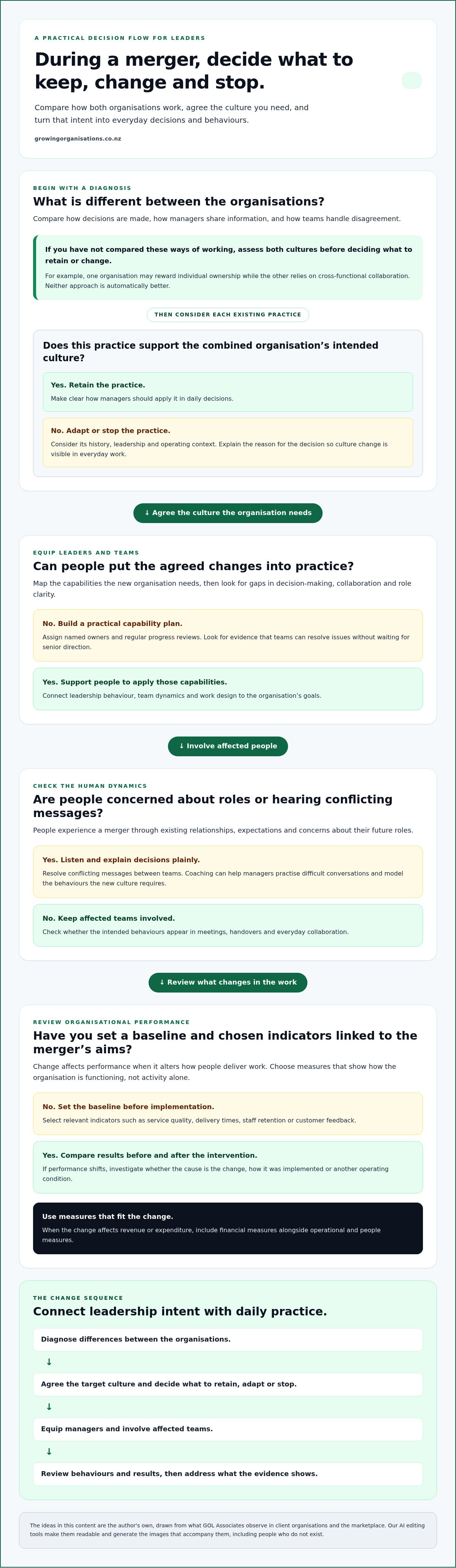
A merger brings together more than structures and systems. Leaders need to understand which beliefs, behaviours and working practices will support the combined organisation.
Start by assessing the cultures of both organisations. Compare how decisions are made, how managers share information and how teams handle disagreement. For example, one business may reward individual ownership while the other depends on cross-functional collaboration. Assuming either approach is automatically better can weaken trust and disrupt work.
Then decide which practices to retain, adapt or stop. A process that works in one organisation may depend on its history, leadership or operating context. Explain the reason for each decision and give managers clear guidance on applying it. This makes culture change visible in daily decisions, rather than leaving it as values on a slide.
Building Change Capability
Change capability means giving leaders and teams the insight, skills and authority to put agreed changes into practice. Map the capabilities the new organisation needs, then identify gaps in decision-making, collaboration or role clarity. Build a practical plan to address those gaps, with named owners and regular progress reviews. Look for evidence that teams can resolve issues without waiting for senior direction.
Behavioural Change and Human Dynamics
People experience a merger through existing relationships, expectations and concerns about their future roles. Leaders should listen to those concerns, explain decisions plainly and resolve conflicting messages between teams. Coaching can help managers practise difficult conversations and model the behaviours the new culture requires. Track whether those behaviours show up in meetings, handovers and everyday collaboration.
Change and Organisational Performance
Change affects performance when it alters how people deliver work. Set a baseline before implementation, then track relevant measures such as service quality, delivery times, staff retention or customer feedback. Choose indicators linked to the merger’s aims, rather than counting activity alone. If performance shifts, investigate whether the cause is the change, how it was implemented or another operating condition.
How can organisations measure results and ROI? Compare agreed performance indicators before and after the intervention, then assess whether observed gains are related to its costs and actions. Use financial measures when the change affects revenue or expenditure, alongside operational and people measures that show how the organisation is functioning.
Organisational development and change work best when leadership intent is reflected in actual behaviour. Follow a clear sequence: diagnose differences, agree the target culture, equip managers, involve affected teams and review results. This discipline supports lasting change while keeping organisational performance in view throughout integration.
Organisational culture and capability
Culture shapes how people interpret strategy and make decisions. Assess it through observable behaviours, not values statements alone.
Culture and Organisational Purpose
Purpose helps people decide what matters when priorities compete. Compare the organisation’s stated purpose with choices made in budgets, customer commitments and team priorities. For example, a business promising responsive service should examine whether its approval structure allows staff to resolve customer issues promptly. Any mismatch points to a practical barrier, not just a communications problem.
Leaders can test alignment by asking teams to explain how their work contributes to the organisation’s purpose. Compare answers across functions, then identify where different interpretations cause delays or duplicated effort. Use the findings to clarify decision rights and adjust strategy. Keep the purpose consistent while allowing teams to apply it to their responsibilities.
Organisational Health and Culture
Organisational health is reflected in how reliably people coordinate, learn and deliver work. Examine evidence such as repeated handover failures, unclear accountability or decisions stalled between teams. In Scotland, a Scottish Government report identifies underdeveloped organisational development skills as a challenge in social work services. This example shows why capability needs deliberate attention alongside culture.
Use a focused review to connect symptoms with working conditions. If teams report slow decisions, trace the approval path and identify where authority becomes unclear. If feedback rarely changes practice, examine whether managers make time to discuss it and act. Choose interventions that address the causes, then assign an owner to review whether working relationships and effectiveness improve.
Evolving Organisational Culture
Culture develops through repeated decisions, leadership signals and routines. Define the behaviours the organisation needs, then identify where current processes reinforce different habits. For example, if collaboration is a priority, review whether team objectives reward shared outcomes or only individual results. Align incentives, meeting practices and role expectations to make the desired behaviour easier to apply.
Change the structures and routines that shape daily work, not just the language used to describe them. Test an intervention in a defined area, gather insight from staff and managers, then adapt it before extending it. Review decisions and outcomes at agreed intervals. This creates a practical cycle: observe behaviour, adjust the conditions around it and assess whether the change supports the organisation’s purpose.
VA Consultants says organisational development focuses on people and culture, which shape how effectively, competitively and sustainably organisations operate. Treat capability building as part of changing how people work together, not as a separate training exercise. Identify the skills, relationships and decision-making practices needed to support the intended behaviours. Compare those needs with what teams can do now, using staff and manager insight to locate gaps in confidence, authority or shared understanding.
Turn those gaps into practical support: clarify responsibilities, create opportunities to practise new ways of working and give managers a clear role in reinforcing them. Keep the review connected to daily work, so people can see how changes affect handovers, decisions and collaboration. Check whether the support helps teams apply the desired behaviours, and revise it if obstacles remain. This makes capability development an ongoing part of organisational adjustment, grounded in the conditions people encounter in their roles.
Organisation-wide transformation
Organisation-wide transformation changes how strategy, structure and daily work connect. Some change processes are wide-ranging and may take several years to implement, so leaders need a clear sequence, accountable owners and regular reviews.
Start by defining the business problem and intended result. A move into a new market, reduced funding or new technology may require different decisions across teams. Map the functions, roles and processes affected. Then identify dependencies, such as whether redesigning customer service also requires new management information or decision rights. This gives leaders an informed view of the work before implementation begins.
Next, translate the strategy into practical choices. If a Scottish company moves from selling products to delivering ongoing services, sales, operations and customer support may all need to change. Specify what each team must stop, start or continue doing. Set measures linked to the intended outcome, such as service quality or successful handovers. Review the evidence during delivery and adjust actions when results reveal a gap.
Digital transformation is not achieved by introducing technology alone. A new system can alter workflows, responsibilities and the information people use to make decisions. Before implementation, map a task such as processing a customer request from start to finish. Identify where the tool changes the task, who handles exceptions and what capabilities staff need. Involve affected teams, then test the revised workflow before wider adoption.
Talent transformation focuses on the skills and leadership behaviours required by the new operating model. Compare current capability with the demands of future roles. If digital tools reduce routine administration, for example, teams may need stronger judgement when handling exceptions. Plan development around real tasks and make role expectations clear. Coaching can help managers lead unfamiliar work and reflect the organisation’s values in their decisions.
Sequence the work so people, processes and systems move together. A practical plan can define the outcome, dependencies, owners, communication, capability needs and review points. Keep the plan visible to the teams doing the work. When a milestone slips, assess which dependent activities need to change instead of treating the delay as an isolated issue. This keeps the focus on delivery, not activity alone.
For a Scottish organisation changing how it delivers a service, leaders should test whether the design fits the work on the ground. Can teams make the required decisions? Do managers have the skills to support the new model? Do the organisation’s values shape how changes are introduced? These questions help executives judge whether the transformation’s scale fits its purpose.
Systemic thinking and unintended consequences
Organisational development can involve the whole organisation, because change in one area affects others. Common risks include treating symptoms in isolation, overlooking dependencies and creating behaviours that work against the intended result.
Whole-System Organisational Development
A whole-system view traces how teams, processes, authority and information interact. For example, changing sales targets may affect customer promises, delivery capacity and complaint volumes. Map those connections before choosing an intervention. Ask the leadership team to identify who gains responsibility, who loses decision-making authority and where work could shift.
Then test the proposed change against the organisation’s actual operating conditions. A new customer response target will fail if staffing, approval routes or handovers remain unchanged. Involve affected functions in the design, not just the teams sponsoring the programme. Their practical knowledge can reveal dependencies a senior-level plan misses.
Define the intended outcome and the behaviours needed to achieve it. If a restructure aims to speed up decisions, specify which decisions move, who owns them and what information they need. Review whether the new arrangement improves the work or simply transfers delays to another team. This keeps system-wide effects in view.
Understanding Organisational Systems
Organisational systems include formal structures and informal habits. Examine how work moves from request to completion, where approvals pause and how teams handle exceptions. For example, a central approval rule may protect consistency but prevent local teams from resolving straightforward customer issues. Trace the process before changing the rule.
Use interviews, process mapping and observation to compare written procedures with daily practice. Ask staff to describe a recent case, including handovers and decisions. Look for repeated workarounds, unclear ownership and conflicting measures. These are clues to how the system operates, not proof that individuals lack ability or commitment.
Understanding these patterns helps leaders distinguish causes from visible symptoms. If a team misses deadlines, examine workload, dependencies and access to decisions alongside individual behaviours. Leaders can then choose an intervention that addresses the underlying constraint, rather than adding reporting requirements that take time without improving delivery.
Common programme challenges include weak ownership, competing priorities and changes that ignore existing incentives. If managers are measured on individual output, for example, asking them to prioritise collaboration may create conflict. Identify these tensions early. Make trade-offs explicit, assign decision-making authority and review how the change affects connected teams.
Monitor for unintended effects after implementation. Compare the intended outcome with practical signals such as delayed handovers, rising rework or customer issues. Invite staff to report what has changed in their work, then investigate patterns rather than isolated complaints. Adjust the intervention when evidence shows it is shifting the problem instead of resolving it.
Organisational development consulting
Good consulting connects diagnosis with implementation. Leaders should expect clear decisions, practical interventions and a way to assess progress.
Choosing an Organisational Development Consultant
Choose a consultant whose approach fits the problem, whether it concerns leadership, culture, structure or capability. Ask how they build insight, involve stakeholders early and help people develop their own skills. A clear scope should identify the work, responsibilities and intended outcomes. These points help you judge whether consultancy services address the organisation’s actual needs.
Organisational development consultants focus on how people, culture and systems affect organisational effectiveness. Management consultants often bring an external perspective or specialised expertise; HR consultants tend to focus on people practices. To find local UK consultants, use professional networks, trusted referrals and business communities, then compare their relevant experience and proposed approach.
Consultancy Costs
The cost of organisational development consultancy depends on the project’s scope, duration, expertise required and delivery approach. The price is set for each case and provided after a quote request. A focused leadership review differs from work involving diagnosis, stakeholder sessions and implementation support. Define the outcomes and boundaries first, so the proposed work can match the organisation’s needs.
Consultant Qualifications and Experience
Look for a strong understanding of behavioural science, particularly leadership, group dynamics and work design. Practical knowledge matters alongside academic learning, so a course that combines theory with practical experience can be useful. Project management experience also helps, as this work often involves starting and delivering projects to defined timelines. Ask how the consultant has applied these skills to comparable organisational challenges.
Consulting Project Steps
A sound project moves from diagnosis to design, delivery and review. First, clarify the business issue and gather evidence through research, discussion or organisational reflection. Involve stakeholders early so they understand the purpose and can shape the solution. Then agree interventions, owners and measures before delivery begins.
Consultants may use workshops, coaching, research or facilitated consulting to deliver the work. Review progress against agreed outcomes, gather feedback and adjust actions when evidence reveals a gap. This keeps the work connected to practical results, rather than activity alone.
Discuss your organisational development priorities and the practical support needed to move them forward.
Organisational development may respond to external changes such as new technologies, market shifts or reduced funding. These pressures can make it useful to examine how the organisation works and what could help it adapt. The featured consultant recommends involving stakeholders early in designing solutions, to build their understanding and ownership of the work.
Possible interventions may draw on behavioural science, organisational reflection, system improvement, planning and self-analysis. The featured consultant delivers solutions through workshops, coaching, research or consulting, with the approach shaped by the work required. The consultant also recommends gaining project management experience, since organisational development often involves initiating and delivering projects to specific timelines. Organisations may use management consultants for an external perspective or specialised expertise.
Growing Organisations: Consultancy and Development
Growing Organisations provides Consultancy and Development for leaders managing organisational change and growth. Turn to this support when strategy needs to become practical action, or when culture, capability and delivery need to progress together.
Its Business Growth Strategy and implementation work connects commercial priorities with the steps needed to execute them. This helps leadership teams focus on decisions, responsibilities and progress, rather than leaving strategy as a document without clear ownership.
For boards, CEOs and managers, the next step is to define the organisational challenge and the result the business needs. Growing Organisations can shape the work around those priorities.
Contact Growing Organisations to discuss your organisation’s development and growth priorities.
Make the next change deliberate
Lasting progress starts with a leadership decision: identify the organisational constraint that matters most, name who owns addressing it and decide how progress will be judged. This gives an organisational development consultancy a clear mandate and keeps the work tied to business priorities. It also gives your team a practical basis for deciding what to change next, rather than launching another initiative without clear ownership.
Growing Organisations offers Consultancy and Development, alongside Business Growth Strategy and implementation. If your organisation is ready to turn a growth priority into a focused programme of work, contact Growing Organisations to discuss a practical next step.
Clear priorities and accountable leadership give lasting change a firm starting point.
The ideas in this content are the author’s own, drawn from what Growing Organisations observe in client organisations and the marketplace. Our AI editing tools make them readable and generate the images that accompany them, including people who do not exist.
Frequently Asked Questions
What does an organisational development consultancy do?
An organisational development consultancy helps leaders improve how their organisation works and adapts to change. In Scotland, an organisation responding to reduced funding could use external support to assess which activities remain essential, where responsibilities overlap and what capabilities teams need. The findings can inform leadership decisions and a practical plan to adjust priorities, roles and ways of working while maintaining service delivery.
[The ideas in this content are the author’s own, drawn from what GOL Associates observe in client organisations and the marketplace. Our AI editing tools make them readable and generate the images that accompany them, including people who do not exist.]